
Below are six common commercial systems businesses in Blacktown often shortlist, plus how to decide between them.
What should a business in Blacktown consider before choosing a system?
They should start with capacity, zoning, and operating hours, because these three factors drive both comfort and cost. The right design keeps indoor temperatures stable without short cycling or overworking the compressor.
They also need to consider noise, placement of outdoor units, service access, and energy efficiency ratings. For many sites, the best outcome comes from a proper heat load assessment rather than replacing like for like.
Which system suits smaller shops, offices, and clinics best?
Split systems are often the simplest fit for smaller tenancies that need straightforward cooling and heating in the context of commercial air conditioning Blacktown. They are widely available, relatively quick to install, and suit spaces where one indoor unit can cover a defined area.
They can be a practical option for small offices, consulting rooms, and retail stores with consistent layouts. If the business expects future fit-out changes, they should confirm whether extra capacity or additional splits might be needed later.
Why do many multi-room businesses choose multi-split systems?
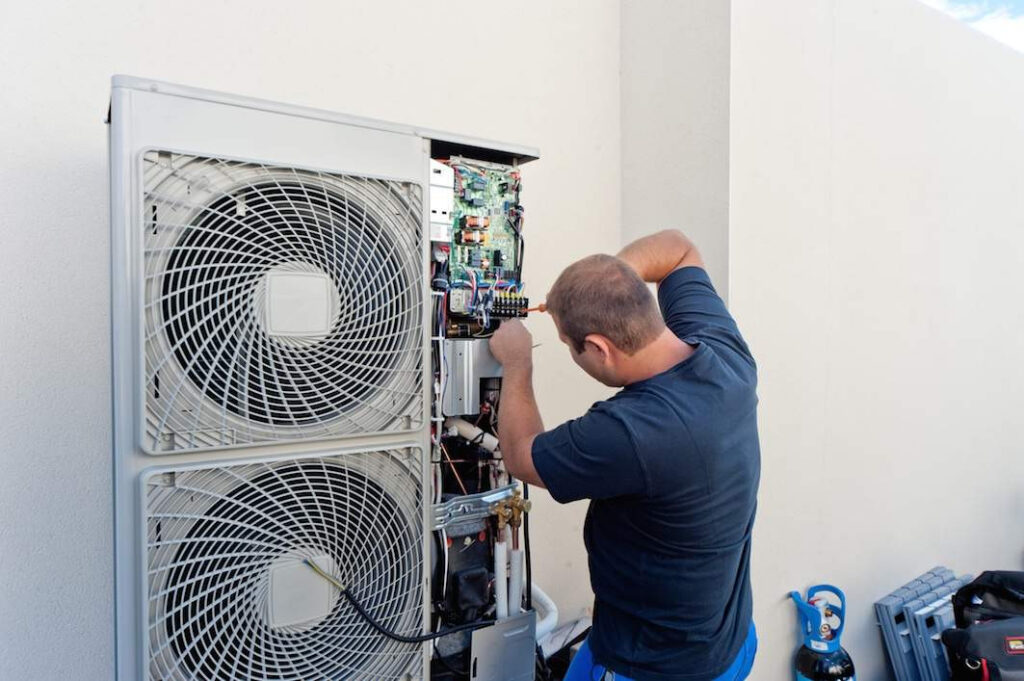
Multi-split systems connect multiple indoor units to one outdoor unit, which helps when they need separate temperature control across several rooms. They are commonly used in small to mid-sized offices, medical suites, and back-of-house areas that heat up differently.
They can reduce outdoor clutter compared with several single splits. They should still confirm pipe runs, ceiling space, and maintenance access, because these details affect both performance and serviceability.
When is ducted air conditioning the right commercial choice?
Ducted systems work well when they want a clean look, quieter operation, and even airflow across larger areas. They are common in open-plan offices, hospitality venues, and showrooms where aesthetics and consistent comfort matter.
They should prioritise good zoning and quality duct design, because poor ducting can waste energy and create hot and cold spots. A well-zoned ducted setup also helps them avoid cooling unused areas.
How does VRF or VRV help larger offices and mixed-use buildings?
VRF (Variable Refrigerant Flow), also called VRV, suits buildings that need precise zoning and high efficiency across many areas. It can handle varying loads, so rooms with different sun exposure or occupancy can be controlled more accurately.
They often choose VRF for larger offices, education sites, and multi-level buildings. It usually costs more upfront, but it can lower long-term energy use and offers strong flexibility when layouts change.
Why are rooftop packaged units common in retail and warehouses?
Rooftop packaged units (RTUs) combine key components in a single unit mounted on the roof, making them popular where indoor plant space is limited. They suit big floorplates such as retail, gyms, and light industrial sites that need robust airflow.
They can simplify maintenance logistics because major servicing happens on the roof. They should still factor in roof structure, crane access, weather exposure, and safe service pathways.
When should a business choose evaporative cooling instead?
Evaporative cooling can be cost-effective in large, well-ventilated spaces, particularly where they want high airflow and lower energy bills. It is commonly considered for warehouses, workshops, and some retail spaces with open doors.
They should confirm whether humidity and indoor air quality requirements make sense for evaporative. It is not ideal for every business type, especially where tight temperature control or sealed environments are required.
How can they pick the best of these six systems for their site?
They should shortlist systems based on three things: the building’s zones, the tenancy’s constraints, and the comfort expectations of staff and customers. The “top” system is the one that meets demand efficiently and can be serviced easily.
They should ask for a site assessment that includes heat load calculations, proposed zoning, estimated running costs, and a clear maintenance plan. For commercial air conditioning in Blacktown, that combination is what usually separates a smooth installation from an expensive compromise.
FAQs (Frequently Asked Questions)
What factors should businesses in Blacktown consider before choosing a commercial air conditioning system?
Businesses should focus on capacity, zoning, and operating hours to ensure comfort and cost-efficiency. Additionally, noise levels, outdoor unit placement, service access, and energy efficiency ratings are crucial. A proper heat load assessment often yields better results than simply replacing like for like.
Which commercial air conditioning system is best suited for smaller shops, offices, and clinics in Blacktown?
Split systems are ideal for smaller tenancies needing straightforward cooling and heating. They are widely available, quick to install, and effective for spaces where one indoor unit can cover a defined area. Businesses should consider future fit-out changes to determine if extra capacity or additional units might be necessary.
Why do multi-room businesses in Blacktown often select multi-split air conditioning systems?
Multi-split systems connect multiple indoor units to a single outdoor unit, allowing separate temperature control across several rooms. This setup reduces outdoor clutter compared to multiple single splits and is common in small to mid-sized offices and medical suites. Proper planning of pipe runs, ceiling space, and maintenance access is essential for optimal performance.
When is ducted air conditioning the preferred choice for commercial spaces in Blacktown?
Ducted systems are suitable for larger areas requiring a clean look, quieter operation, and even airflow—such as open-plan offices, hospitality venues, and showrooms. Prioritizing good zoning and quality duct design helps avoid energy waste and temperature inconsistencies by preventing cooling of unused areas.
How do VRF (Variable Refrigerant Flow) systems benefit larger offices and mixed-use buildings in Blacktown?
VRF (or VRV) systems are engineered for high-performance, multi-zone environments where thermal loads vary across spaces and time. They enable precise temperature control across different zones, making them particularly effective for offices, educational facilities, and mixed-use developments with diverse occupancy patterns and solar exposure.
Although capital expenditure is typically higher, the operational efficiency and scalability deliver strong lifecycle ROI. For projects requiring flexibility and long-term energy optimisation, VRF air conditioning solutions for commercial buildings in Blacktown provide a robust framework for balancing comfort, efficiency, and future layout adaptability.
What makes rooftop packaged units (RTUs) a common choice for retail stores and warehouses in Blacktown?
Rooftop packaged units (RTUs) consolidate all primary HVAC components into a single, self-contained system installed at roof level, eliminating the need for internal plant space. This makes them highly suitable for large open-plan environments such as retail stores, gyms, and warehouses that demand consistent, high-volume airflow.
Operationally, RTUs streamline maintenance since servicing is conducted externally, reducing disruption to business activities. However, implementation must account for structural load capacity, crane access during installation, weather exposure, and compliant service access pathways. For these applications, rooftop packaged air conditioning systems for retail and warehouse spaces offer a practical and scalable climate control solution.